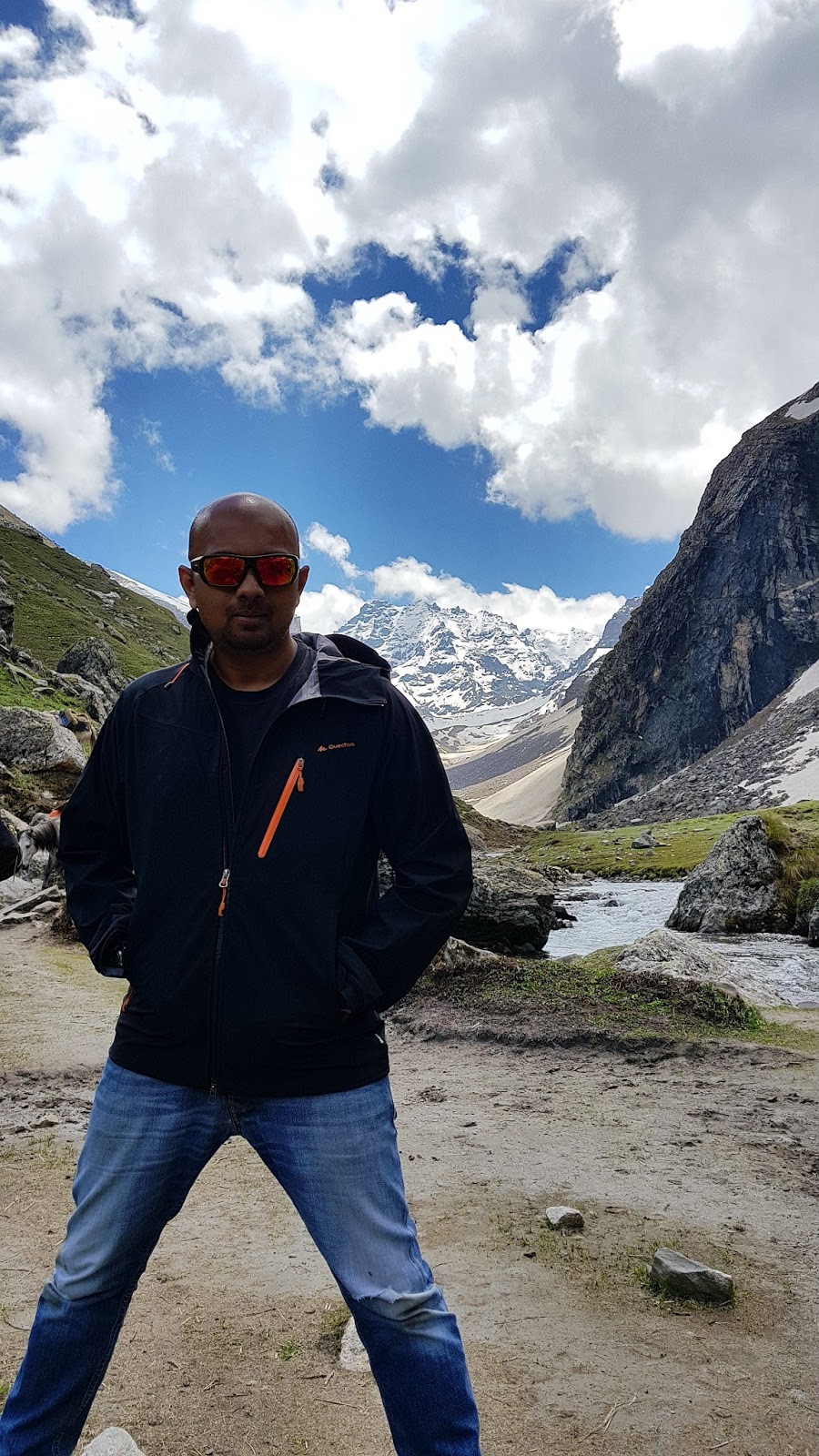
At the start of our Annapurna Circuit
Trek, our affable guide, R K Gurung, gave us a lot of useful tips on how to
make the climb less strenuous. We all knew, however, that the final two days
would test our endurance to the limit. Fast forward, 5 days later, and we found
ourselves at Yak Khyrkha, the destination before we reach Thorong Phedi- from
where we would summit the Thorong-la pass at 5400 metres.
At Yak Khyrkha, there are no
mobile networks, no functional Wi-fi services (which are available at almost all
camps en route to Thorong-la) and no telephones. Let your loved ones know that you will not be
able to contact them for the next two-three days, said Aising, one of the other guides. Quite noticeably, concerned faces replaced
tired ones. Located at around 4100 metres above sea level, Yak Khyrkha is not
really a place you’d want to spend more than a night. There’s precious little
to do and the mind starts getting restless- let’s get on with it, it says
incessantly. Patience is tested aplenty and why not, after all we’d trekked
nearly 80kms in the past 4 days. We had climbed, descended, climbed, descended,
encountered good weather, bad weather, biting cold and what not! We were itching to complete the trek!

A debate sparked during the late
hours of the evening- should we trek to Thorong Phedi and camp there tomorrow?
Or should we go even higher to Thorong High Camp? After a heated discussion,
the guide decided that we should camp at Thorong Phedi which was at 4500
metres. The Thorong High Camp which was 400 metres higher was my preferred
choice and I was not happy about the decision. I did communicate my unhappiness
to the Gurung, but the decision had already been made.
The Trail To Thorong Phedi
The trek from Yak Khykha to
Thorong Phedi was mostly uneventful except for one particular stretch notorious
for frequent landslides. This stretch of nearly 3km needed to be crossed quickly
yet diligently. With a steady incline, this was not an easy climb. In about an
hour and a half, we crossed this hazardous path. By early evening, we reached
Thorong Phedi. By now, some of the trekkers were either too tired, or
indifferent to climb the summit the next day. The two male trekkers, Sathya and
I, decided that we would indeed trek the summit while the others opted to ride
on mules.
 |
| The Treacherous Trail |
 |
| The Treacherous Trail |
The night at Thorong Phedi was
cold. Really cold. The guides were worried that if the sky didn’t clear,
trekking the summit would prove very difficult. After an early meal, a light
one at that, we hit the sack. In order to summit from 4500 metres to 5400
metres- a climb of 900 metres, 5 hours was required. We needed to cross
Thorong-la on or before 930am. Beyond that, the gusty winds would make our
climb even more difficult and uncertain.
The Summit
At 330am, Sathya and I woke up,
got our gear on, and made our way to the dining room of our Tea House. Hot Soup
was prepared for us by the kitchen staff of the tea house. Other groups
gathered as well. The next few hours, particularly for me, were going to test
my will power and physical endurance way more than thought. The temperature
outside was measured at -16 degrees. Our camel packs would freeze, we were
told, hence thermoflasks were filled with hot water. With only half litre
thermoflasks in our sacks, we would need to drink the water one sip at a time lest we
run out of it too soon.
 |
| Ready for the Summit |
After wishing our fellow trekkers
all the very best, and being given an applause by the staff of the Tea House
for making it so far, at 4am, we started our ascent. The first 200 metres were
literally vertical with an incline of nearly 75 degrees. It was all rock with
some trail. We took our time in finishing this bit. As we crossed the first
hurdle, our camel packs had frozen. A small cup of hot water proved equal to a
lease of life. We cannot stop, have to keep moving, Aising, our other guide
told us. The weather has been good so far but we cannot take that for granted.
He egged us on as we proceeded upwards.
 |
| En Route to the Summit |
 |
| With R K Gurung |
The next part of the trek was all
about distance and less about height. As we climbed and climbed, the altitude
started to get to us as the oxygen levels reduced significantly. The cold, too,
was relentless. Snowy mountain peaks surrounded us - above, below, to the left,
to the right. There was only snow till where the eyes could see. The gorgeous monotony was broken when Aising
directed my attention to my left. Look at that, he pointed out. As I turned to
look, I saw fresh pugmarks on the snow. A snow leopard was here not so long
back. Probably a few minutes before we came here. My heart raced! Would we be
lucky enough to see the ghost of the Himalayas? The elusive yet majestic Snow
Leopard? Aising smiled back and said, it has already gone far ahead and shows
itself only it wants to be seen. We moved on.The reducing oxygen levels coupled
with the steady incline and the snow made me weary with each step. I was
stopping nearly every 5 minutes for to get my breath back. With water being
scarce, there was no other option than to take frequent breaks much to the
chagrin of the guides accompanying us. We were slowing down, and for now
reaching Thorong-la by 930am seemed farfetched. Something else was happening! For
the first time in the entire trek, I was feeling the weight of my rucksack. The
rucksack, which weighed 12kgs, now felt like 120kgs on my shoulders.
The Rucksack
Throughout the entire course of
the trek, the Sherpas, the brave and fearless residents of the Himalayas,
volunteered to carry my rucksack. It is common practice for trekkers to give their rucksacks (weighing anything from 10kgs to 15kgs) to Sherpas while the trekkers themselves carry only a day-pack. Whilst others on the trek gladly gave them
theirs, I decided to carry my rucksack. This trek wasn’t only about conquering the
mountains, it was about how far I could push myself and carrying my own
rucksack was an integral part of that plan. My fellow trekkers advised me
against it saying that it was ridiculous to carry your own pack because that’s
what the Sherpas were there for. That’s what they were being paid for, I was
told. I was very clear that I would carry my own load. I did, however, promise
them that if at any point in time I felt like the load was too much to carry, I
would promptly hand it over to one of the Sherpas. For the first time during
the entire trek, I was tempted to do so.
 |
| My Rucksack |
With another 3 hours to go, a friendly
sight was presented to us in the form of our other trekkers. Seated on their
mules, they passed us by with claps and encouraging words that boosted our
energy.
The Sathya Factor
The last hour will soon be upon us,
as will be the steep climb, we were told by Aising. By now, I was absolutely
exhausted. There was no water, too. We could see people crossing us but I for
one was completely drained. My breaks were literally by the minute. I stopped
looking up or looking forward. All I could do was look down and take one small
step at a time. One hour seemed like eternity. My fingers were stiff after
clasping my trekking pole tightly for nearly 4 hours. My feet were sore as
climbing in snow is an arduous task. For every step I took, I was cheered on by
one man, my fellow trekker Sathya. As a first time trekker, he demonstrated incredible
resolve in trekking the Annapurna Circuit. He had exceeded all our expectations
and most importantly, he was always positive.
 |
| My Partner-in-crime, Sathya |

Finally, when I was just about a
50 metres away, I fell
to my knees. I could barely move. Out of breath, out of water, and completely
out of energy, and although I could see him flailing his arms and screaming
that we had made it, Sathya's voice was distant. Can't go any further, I said to myself. Having come this far, with only 50 metres to go, giving up was not an option.
Silencing the voice within
With one last push, I rose to my
feet, dug my Trekking pole into the snow and moved forward. I counted 50 steps.
At the 50th Step, I could see my friend with a broad smile coming
towards me. I threw my stick in the air and gave him a bear hug. And while doing so, for the first time since
many years, I broke down. I had done it and I had done it on my terms! Throughout my
life, I have always considered myself physically weak. A voice within me always
mocked me for my lack of strength and endurance. Weakling, it kept needling me.
It had lessened significantly after my first Himalayan Trek (Hampta Pass) and
had nearly vanished after Devil’s circuit. This trek was the knockout punch
that silenced that inner voice forever.
 |
| Made It!!! |
Hot water was served at the Pass.
I sipped it slowly as I saw happy faces around me. The feeling of achievement
was writ largely on every face that passed me. I made it a point to shake hands
with nearly everyone I saw. Within half an hour, it was time to descend. The
descent was going to take us nearly 7 hours. Whilst many claim that the ascent
is the most gruelling part of the trek, there are a good number who say that
the descent cannot and should not be underestimated.
The Descent
As we began our descent, a
strange feeling began to creep in. I began experiencing a shooting pain in my
head. AMS or Acute Mountain Sickness is something I had successfully managed to
evade throughout the entire ascent without any medication, however, it found
its way into me during our descent. This was a result of ascending and
descending high altitudes within a short span of time with fluctuating oxygen
levels. After an hour of descending, I decided to handover my rucksack to
Aising. He gladly carried it for me as I decided to take my time descending. My
vision was blurry hence I had to take each step slowly. Instead of being my usual chatty self, I
became very quiet. All of Sathya’s efforts to converse were met with monosyllables.

The Nod and The Embrace
Finally, after a couple of hours
of descent, my head was clear again. From then on, I was racing downward. Triumphantly, I reached our base camp where
the other trekkers were waiting for us. So, how was it, I was asked by one of
the trekkers. I just smiled and plonked myself on a chair and said, exhilarating!
From here on, it was easy and even though we had another 2 hours of descent, it
was mostly the plains. We were to camp at a very famous Hindu Temple town
called Muktinath. After praying to the deity, it was time to head to our hotel.
As we finished dinner, R K Gurung came upto me and said, I have a lot of
respect for you! Not many Indian trekkers carry their own rucksacks. I acknowledged his compliment with a nod of my
head and embraced him for his wonderful leadership skills in navigating the
group successfully past Thorong-La Pass.

The Brave and The Strong
Without a shred of doubt, the real heroes of all Himalayan treks are the Sherpas. Without their support, guidance, and tremendous physical strength and endurance, we would not be able to trek the mighty Himalayas. Take a bow, Team R K Gurung and Aising. I slept very well that night as I began
to think about my next trek. 2019. Mount Kilimanjaro.